

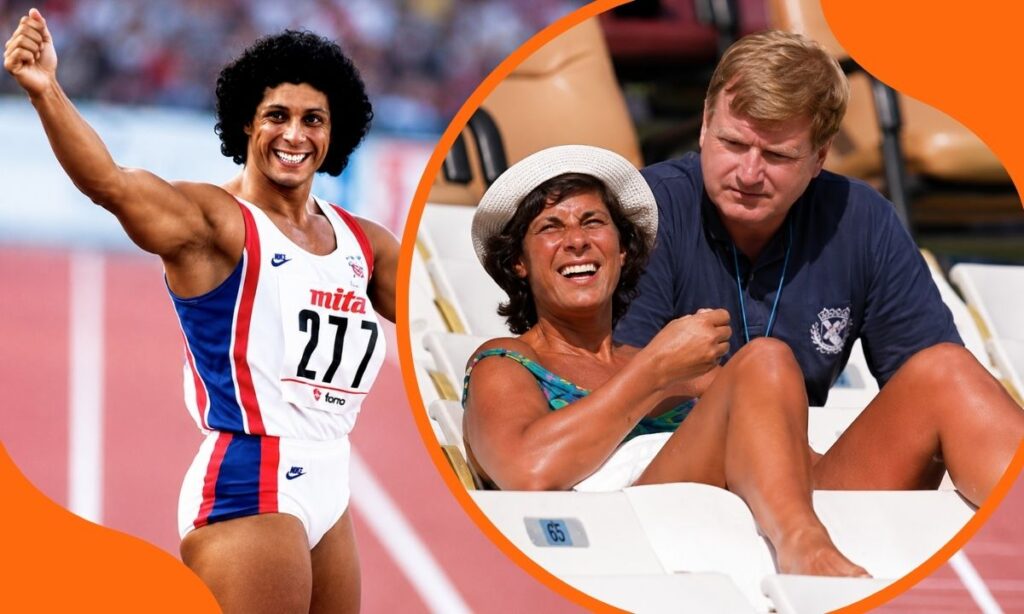
Andrew Norman was more than the former husband of Fatima Whitbread. As British athletics moved from amateurism to professionalism, he became one of the country’s most powerful organisers, agents and dealmakers. He attracted sponsors, negotiated appearance fees and helped turn track meetings into valuable television events. Yet the forceful methods behind his rise also generated serious controversy, leaving a legacy that invites both admiration and condemnation.
Profile Summary
| Quick fact | Details |
|---|
| Full name | Andrew John Norman |
| Known as | Andy Norman |
| Born | 21 September 1943, Ipswich, Suffolk |
| Died | 24 September 2007, aged 64 |
| Profession | Police officer, athletics promoter, sports administrator and athletes’ agent |
| Major role | Promotions official for the British Athletics Federation, 1984–1994 |
| Spouse | Fatima Whitbread, married in 1997; divorce completed in 2006 |
| Child with Whitbread | Ryan Norman, born in February 1998 |
| Best known for | Commercialising British athletics and representing elite competitors |
Who Was Andrew Norman?
Born in Ipswich in 1943, Andrew Norman attended the town’s grammar school before joining the Metropolitan Police in 1962. Athletics was already central to his interests. Working near Crystal Palace, then an important centre of British track and field, gave him opportunities to help organise meetings and establish connections with competitors, officials, broadcasters and sponsors.
By the time he left the police in 1984, Norman had developed a reputation as an exceptionally effective sporting operator. His importance did not come from major competitive victories of his own. Instead, he understood what made an athletics meeting commercially attractive: recognisable competitors, competitive races, television exposure, sponsorship and dependable organisation.
How Andrew Norman Helped Professionalise Athletics
British athletics spent much of the twentieth century officially committed to amateurism, even as leading competitors increasingly needed financial support to train, travel and compete internationally. The result was a system commonly described as “shamateurism”, in which payments sometimes existed without being openly recognised.
Norman helped push the sport away from that contradiction. As a promoter and later a senior British Athletics Federation official, he negotiated with sponsors, television companies and international meeting organisers. Contemporary obituaries credited him with helping generate major commercial income, including sponsorship arrangements and a valuable television agreement that transformed what British events and athletes could earn.
He also developed professional relationships with elite competitors. Reputable reports connect him with Steve Ovett, Linford Christie, Colin Jackson and Sally Gunnell, among other prominent names. His influence extended beyond representation because athletes seeking access to important British meetings often had to work through the network he controlled.
That centralised system delivered results, but it also created an imbalance. One person could exercise influence over promotion, payments, athlete access and the composition of major events. The commercial progress was substantial; so were the concerns about accountability.
Andrew Norman and Fatima Whitbread
Fatima Whitbread was already one of Britain’s greatest field athletes. She broke the javelin world record during qualifying at the 1986 European Championships, became world champion in 1987 and won Olympic bronze in 1984 and silver in 1988.
Her relationship with Norman developed while both were deeply involved in elite athletics. They married in Copthorne, West Sussex, in May 1997. Their son, Ryan, was born in February 1998 after years of fertility difficulties and a third round of IVF treatment.
Whitbread later explained that becoming a mother carried particular emotional importance because of the instability and neglect she had experienced during her own childhood. She wanted Ryan to grow up with the security she had once lacked.
The couple announced their separation in 2005, and their divorce was completed in 2006. Despite the breakdown of the marriage, later accounts indicate that they remained in contact and continued to share concern for their son.
After Norman’s sudden death, Whitbread said she discovered loans that had been taken partly in her name. According to her later account, the debts amounted to tens of thousands of pounds and forced her to sell the family home. She subsequently used television work to restore her financial position.
This financial account comes from Whitbread’s own documented interviews. It should therefore be presented as her personal experience rather than as the outcome of a publicly available court judgment or independent financial investigation.
The Cliff Temple Case and Norman’s Dismissal
No responsible account of Norman’s career can avoid the events surrounding Cliff Temple, the respected Sunday Times athletics correspondent who died by suicide in January 1994.
Temple had been investigating Norman’s conduct and possible conflicts of interest within British athletics. Contemporary reporting documented a recorded telephone conversation in which Norman referred to sexual-harassment allegations against Temple. The athlete named in connection with those claims denied making a complaint, while Temple also denied the accusation.
At the subsequent inquest, the coroner found that Norman’s intimidation had contributed to Temple’s distress and death. Norman was dismissed from his position with the British Athletics Federation in 1994, although he continued to work in international athletics, athlete representation and sports promotion.
The episode defines the darkest part of his public record. Precision is essential when describing it. The available evidence supports the coroner’s finding that Norman’s actions contributed to Temple’s condition and death; a biography should not expand that conclusion into accusations that were never formally established.
Life After the British Athletics Federation
Following his dismissal, Norman remained professionally active. He promoted meetings in South Africa and Eastern Europe, continued to represent competitors, and worked on international athletics events.
His knowledge of race organisation, athlete negotiations and commercial promotion remained valuable even after his standing within British athletics had been severely damaged. That continued involvement demonstrated how deeply his network and expertise were embedded in the sport.
Norman died suddenly on 24 September 2007, three days after his 64th birthday, following a trip connected with the World Athletics Final in Stuttgart. Major British obituary reports identified the cause as a heart attack.
A Legacy of Progress and Misused Power
The most credible assessment of Norman is neither praise nor condemnation alone. This article’s central view is that he helped modernise British athletics while also wielding power in ways that damaged trust.
He recognised earlier than many traditional administrators that elite athletics needed television coverage, sponsorship, professional event management and legitimate earning opportunities. British competitors benefited from the financial changes he helped accelerate.
However, modernisation without independent oversight can place excessive authority in the hands of one individual. His career illustrates both sides of that lesson: his organisational ability helped reshape British athletics, while his conduct and the findings connected with the Cliff Temple case damaged public trust and ended his official position.
That contradiction is why his story remains historically relevant. He was an architect of a more commercial and professional sport, but also a warning about what can happen when influence outpaces governance and accountability.
(FAQs)
Who was Andrew Norman?
Andrew Norman was a British athletics promoter, administrator and athletes’ agent who served as a senior promotions official for the British Athletics Federation.
Was he married to Fatima Whitbread?
Yes. The couple married in 1997, announced their separation in 2005 and completed their divorce in 2006.
Did Fatima Whitbread and Andy Norman have children?
They had one son, Ryan Norman, who was born in February 1998 following IVF treatment.
What did Norman do for British athletics?
He attracted sponsors, negotiated television arrangements, organised major meetings and helped create paid opportunities for leading competitors.
Why was he considered controversial?
His control over promotions, athlete representation and access to meetings attracted criticism. He was dismissed in 1994 following the findings connected with journalist Cliff Temple’s death.
When did Andy Norman die?
He died suddenly on 24 September 2007 at the age of 64.
Internal Linking Suggestion
Link the anchor text “Fatima Whitbread’s world-record javelin career” to a detailed HandNews.co.uk profile of Fatima Whitbread.
A second contextual link could be placed on “the professionalisation of British athletics” and directed to a broader feature about the commercial development of UK track and field.
Source Notes
This profile was checked against contemporary and retrospective reporting from established British newspapers, including obituary records and coverage of the Cliff Temple case. Fatima Whitbread’s competitive record was checked against Team GB, while details concerning IVF, separation and the debts discovered after Norman’s death were drawn from Whitbread’s later first-person interview.
You might also like:Craig Musgraves: The Quiet Force Behind Kacey’s Rise
